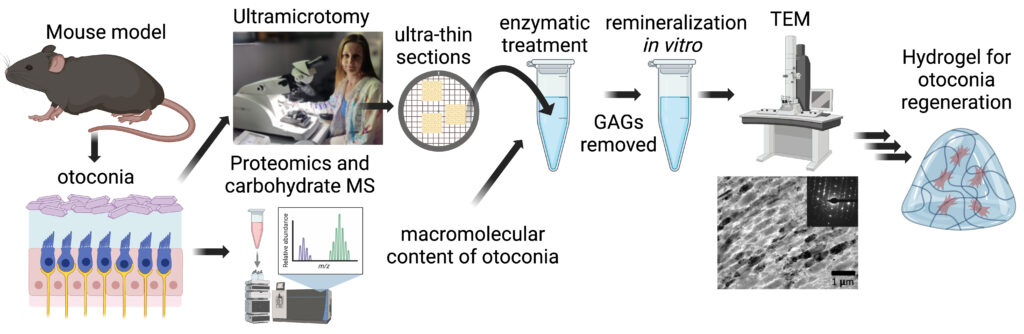
Fish otoliths and mammalian otoconia mineralization
Otoliths and otoconia are calcium carbonate biominerals involved in hearing and balance detection. In humans otoconia damage causes Benign paroxysmal positional vertigo (BPPV). To unredstand the background of this disorder and propose regenaration strategy we need to understand better the mechanism of otolith and otoconia mineralization. In this project, we explore the role of polysaccharides and proteins in biomineralization of those structures. In this project, a novel Native Organic Matrix (NOM)-based in vitro model will be developed. It will allow the evaluation of different molecular factors separately while preserving the native context yet reducing the complexities associated with in vivo studies. The long-term outcome of this project will result in developing strategies for treating human vestibular dysfunction and protective strategies against antibiotic ototoxicity.
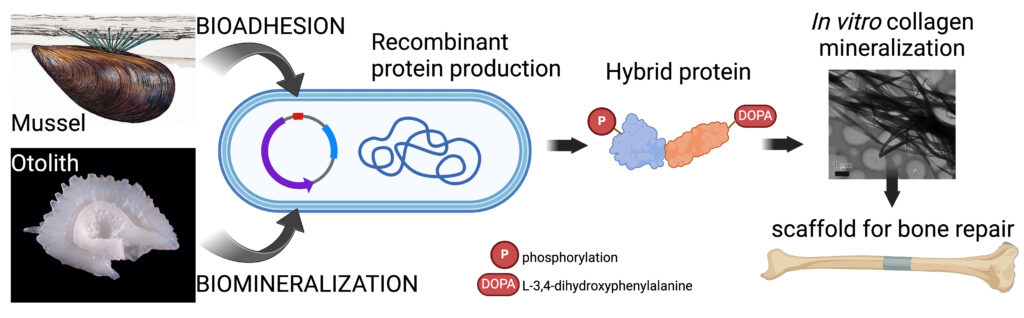
Protein engineering and structural analysis
In our lab, we use recombinant protein technology to study protein structure in the context of mineral formation. Most proteins involved in biomineralization are produced in vivo in small amounts. We use a bacterial expression system to overcome this limitation.
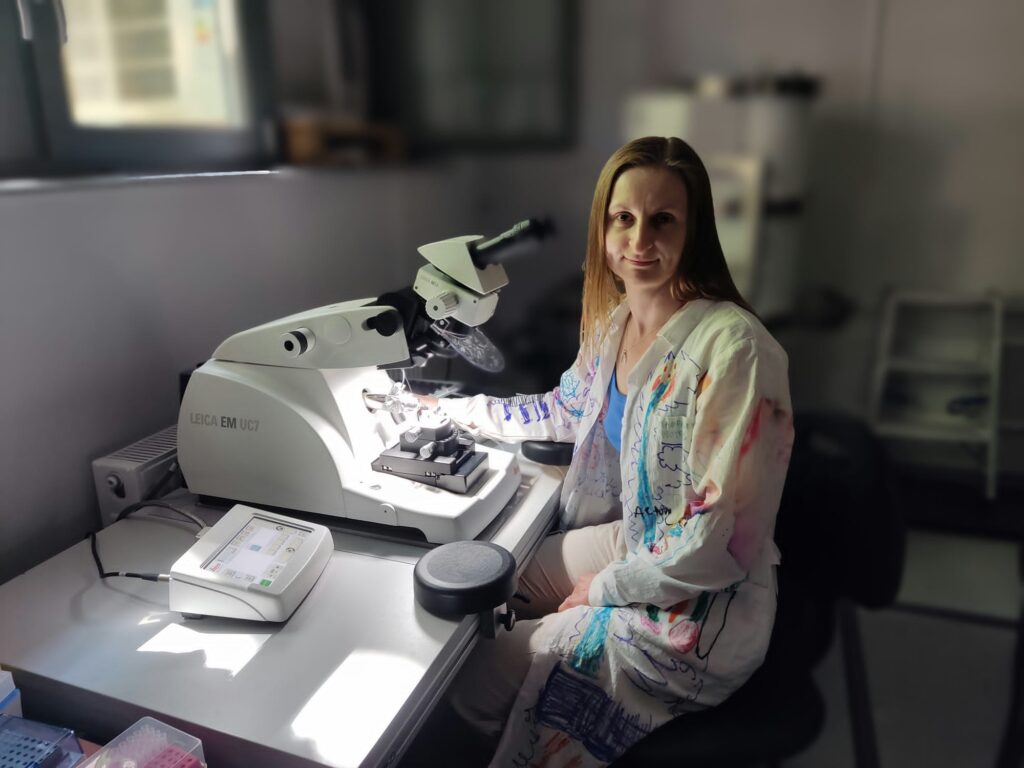
Electron microscopy
Electron microscopy is a key method to explore the structural properties of biominerals at the molecular level. We use SEM and TEM to study biomineralization and the role of macromolecules in it. We also specialize in the preparation of thin sections on ultramicrotome. For more information check out FB funpage: https://www.facebook.com/em.wust/